
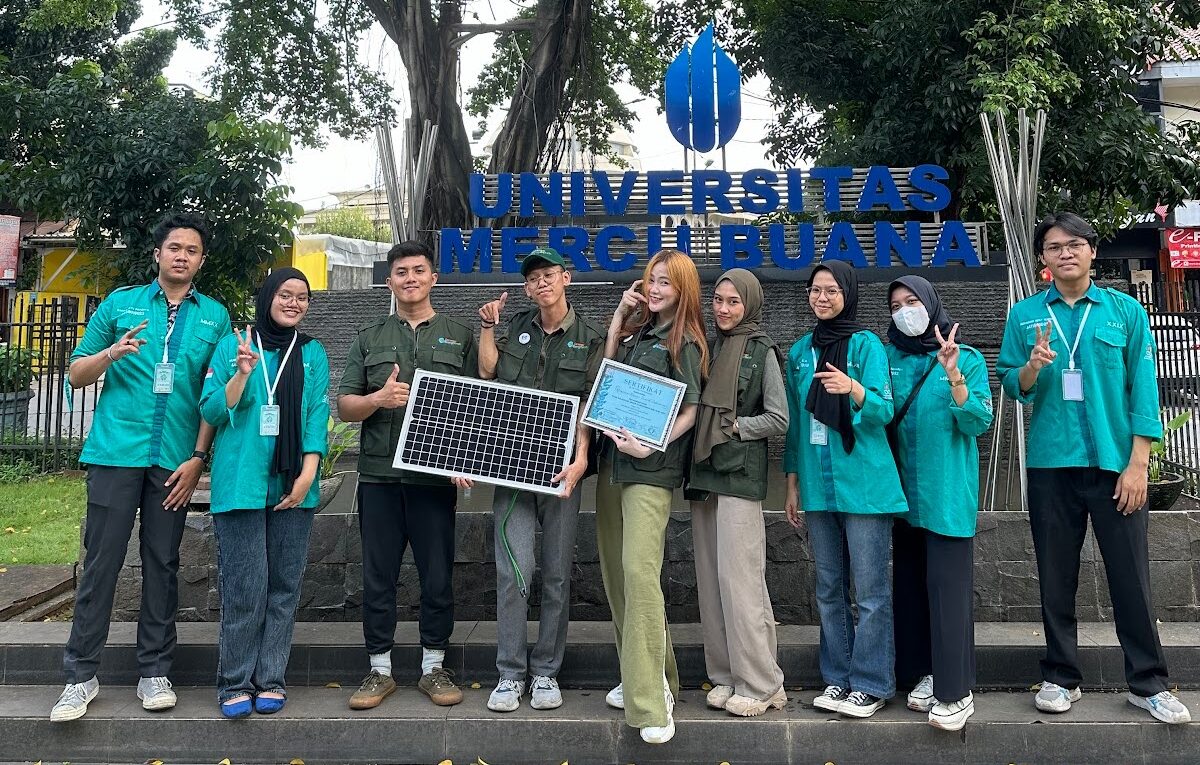
Jakarta, April 27, 2024 – The Social and Environmental Student Organization (OASE) of Mercu Buana University Jakarta, in collaboration with the Clean Energy Generation (Gen-B) Indonesia and Earth Hour Tangerang, held an event to commemorate Earth Day 2024. The event carried the theme “Collective Action for a Better Earth” and the title “SHINING: Together Environmentally Friendly, Energy-Saving.” The event was attended by 28 fifth-grade students from Cipondoh 1 Elementary School, Tangerang, accompanied by the principal and homeroom teachers. Also present were Mr. Sapto, Head of the Student Affairs Bureau of Mercu Buana University. The event took place at Mercu Buana University’s Meruya Campus in West Jakarta from 8:00 a.m. to 1:00 p.m. WIB. The event is expected to raise awareness among the community and the children about the importance of saving energy and preserving the environment.
Education for Sustainable Development (ESD) is recognized as a crucial strategy in championing global sustainability through strengthening the quality of education and lifelong learning. The UN’s 2030 Agenda establishes Sustainable Development Goals (SDGs), which encompass a range of key aspects, including quality and inclusive education (Goal 4), which specifically promotes sustainability-oriented learning (UNESCO, 2023).
According to UNESCO, education plays a key role in achieving the SDGs, including through the promotion of sustainable lifestyles, gender equality, and respect for cultural diversity (UNESCO, 2023). Through the ESD for 2030 program, UNESCO strives to integrate sustainability education into the curricula of schools and educational institutions, aiming not only to increase knowledge but also to shape attitudes and behaviors that support sustainable development (UNESCO, 2023).
This global strategy recognizes that quality education can have a significant impact on the ability of future generations to address global challenges such as climate change and social inequality. Therefore, the educational initiative held with SDN Cipondoh 1 Tangerang in collaboration with GEN-B Indonesia, OASE, and Earth Hour Tangerang is a concrete step in instilling sustainability values in the younger generation (UN, 2023).
On this occasion, Gen-B Indonesia, represented by Maya Lynn (Chair of Gen-B Indonesia), Sekar (Communications Coordinator), and Arkan (Deputy Program Coordinator), delivered material regarding the introduction of Gen-B as a community that focuses on environmental conservation through carbon emission reduction and energy transition. The material continued with an introduction to energy sources, the negative impacts of non-renewable energy use, things that need to be done to save energy, energy transition, and an introduction to alternative/renewable energy.
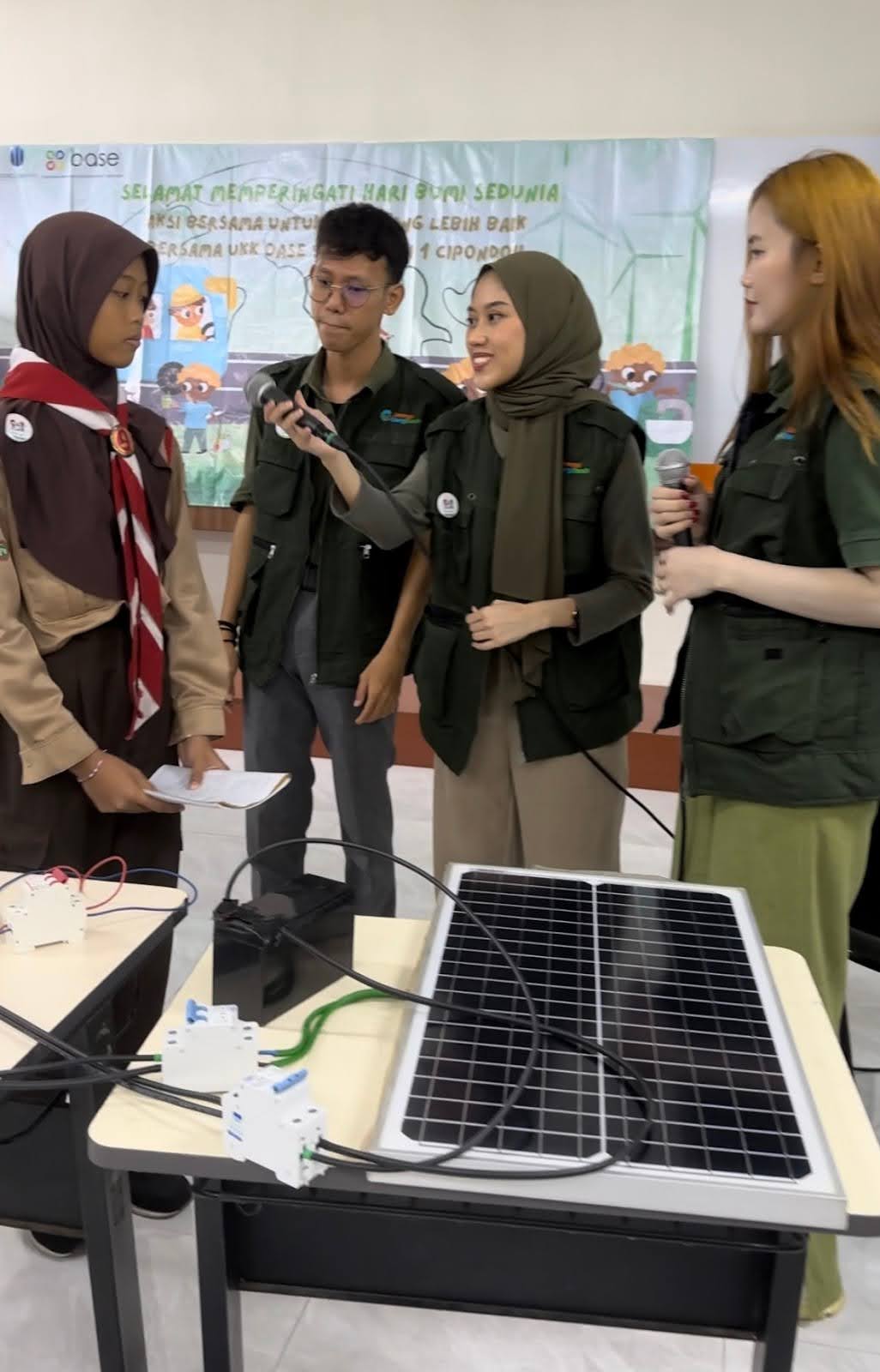
In the next session, Gen-B Indonesia introduced the components of an off-grid solar power plant (PLTS) through a demonstration to the children of SDN Cipondoh 1 Tangerang. The components demonstrated included a 30 Wp solar panel, twin solar cables, a 16A DC MCB, a solar charge controller (SCC), a 7 Ah battery, and a 5 Watt DC bulb. GenB Indonesia not only introduced the components but also taught the students how an off-grid solar power plant (PLTS) works, the function of each component, and even how to turn the system on and off. The 24 students of SDN 01 Cipondoh were very enthusiastic about learning about these renewable energy components. The participants’ enthusiasm was high, and several of them tried operating the solar panels introduced by Gen-B Indonesia.
The presentation session from Gen-B Indonesia concluded with a quiz session on energy saving and renewable energy, as well as a brainstorming session with the students of SDN Cipondoh 1 Tangerang. During the session, the audience enthusiastically responded and understood the importance of energy-saving activities and began to learn about alternative/renewable energy sources.
The principal of SDN Cipondoh 1 Tangerang, Mr. Jamhuri, expressed his enthusiasm for this activity, especially the hands-on practice using a 30WP solar panel. This activity made it easier for students to understand the introduction of renewable energy and energy-saving measures because the material was presented in an engaging and fun way.
Through the collaboration between GEN-B Indonesia, OASE Mercu Buana University, and Earth Hour Tangerang in commemoration of Earth Day 2024, we saw a concrete example of how environmental education can be effectively implemented to foster sustainable awareness and behavior among the younger generation. This activity not only educated but also inspired the students of SDN Cipondoh 1 Tangerang to take an active role in environmental conservation. By continuing this sustainability education and practice, we hope to see a greener and more sustainable world for future generations. Initiatives like this are crucial in realizing the global goals set out in the 2030 Agenda for Sustainable Development. We all have a role to play in protecting the planet, and every action, no matter how small, contributes to the larger effort for a sustainable future.
This activity also provided an opportunity to assess the long-term impact on the environment and local communities. Through ongoing monitoring, it is hoped that the environmental awareness instilled in participants, particularly students of SDN Cipondoh 1 Tangerang, will become an integral part of their daily behavior. Furthermore, this effort can also bring about positive changes in the mindsets and actions of the surrounding community regarding energy and environmental management. By considering these long-term impacts, the collaboration between GEN-B Indonesia, OASE, and Earth Hour Tangerang can serve as a foundation for broader and more sustainable environmental education programs in the future.
Furthermore, it is important to illustrate how this initiative can be strengthened by existing policy support. By providing a legal basis and flexibility for schools and educational institutions to implement environmental education programs, local and national governments can play an active role in strengthening efforts such as those undertaken by GEN-B Indonesia, OASE, and Earth Hour Tangerang. This way, environmental education can become an integral part of the formal education curriculum and gain broader support and recognition nationally.
Furthermore, this initiative opens up opportunities to build broader and more sustainable partnerships among the various parties involved. For example, closer collaboration between educational institutions, civil society organizations, and the private sector can result in more holistic and impactful programs. By complementing resources and expertise, such partnerships can bring about greater change in environmental conservation efforts and foster public awareness.
By adding these elements, the article can provide a more comprehensive picture of the impact and implications of these activities and strengthen understanding of the importance of environmental education in achieving sustainable development goals.
Clean Energy Generation, Reduce Emissions Together!
