
Last month (May 2024), several regions in Southeast Asia experienced a severe heatwave. A heatwave is unusual or extreme hot weather that lasts for several days to weeks. During a heatwave, air temperatures are significantly higher than the normal average in a region.
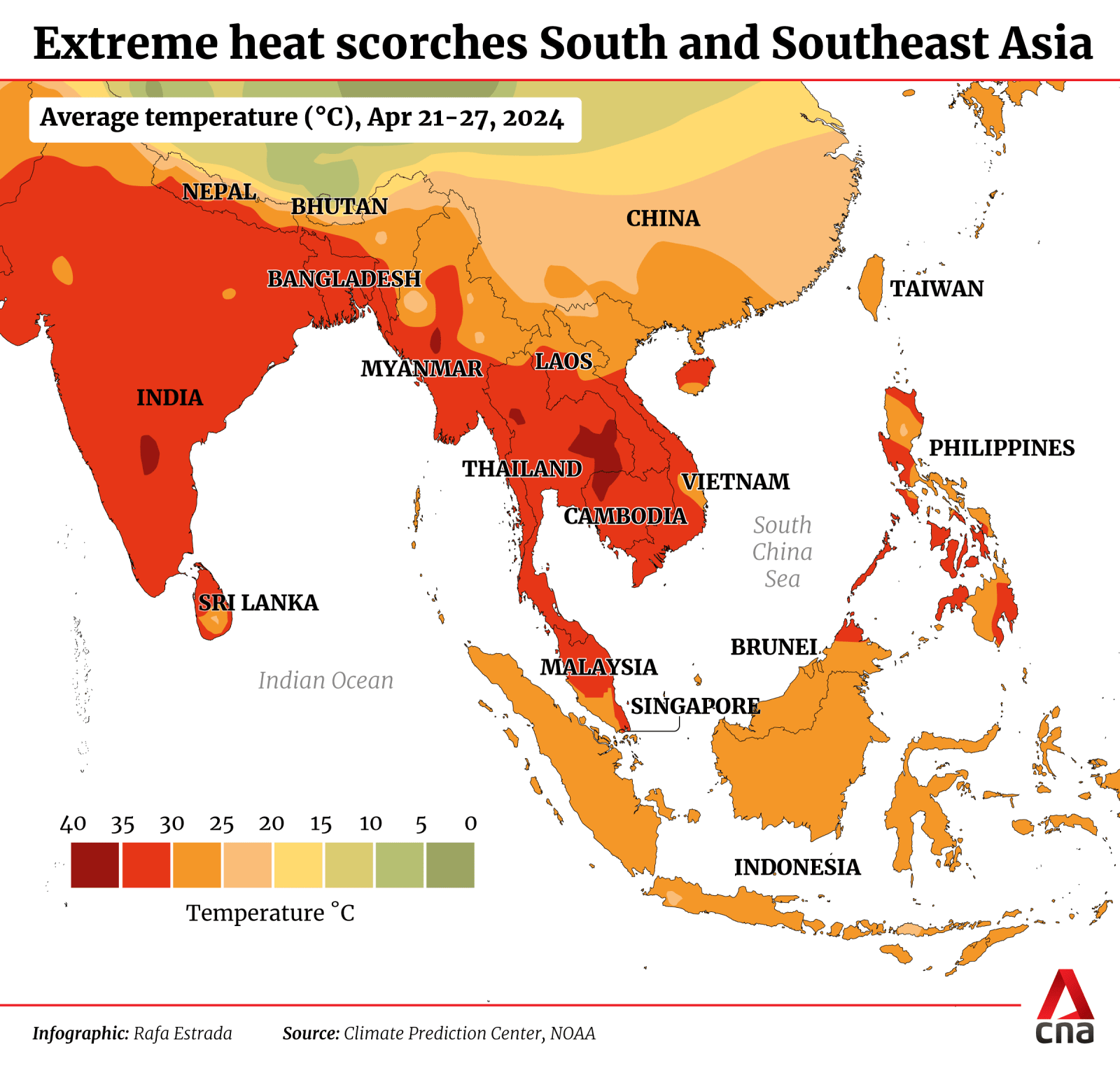
Sumber: Channel News Asia (link)
During this heatwave, Cambodia reached 43°C, the hottest temperature in the country in 170 years. The heat was so intense that many schools in Cambodia had to reduce school hours. Furthermore, several cities in Myanmar recorded the highest temperatures in the world, reaching 48.2°C. Meanwhile, in Bangkok, Thailand, temperatures reached 40°C, with the sensation of being even hotter, reaching nearly 50°C, due to heat trapped between building structures. Thirty people in Thailand have even died from heatstroke in the past month.
These events are occurring due to several factors, including human-generated greenhouse gas emissions and the natural event of El Niño. This phenomenon has resulted in unprecedented temperature increases across the entire region.
Did you know that these two causes of the heatwave are interconnected? Human-caused greenhouse gas emissions can lead to more frequent and intense El Niño and La Niña events. But before discussing that, what exactly are these two natural phenomena, El Niño and La Niña?
El Niño and La Niña are part of the El Niño-Southern Oscillation (ENSO), one of the natural climate oscillations in the Pacific Ocean that has a significant impact on global weather. Oscillation, meaning swinging, in climate terms is a phenomenon where sea surface temperatures and wind direction in the central and eastern Pacific Ocean fluctuate over a certain period.
In current climate science terms, El Niño indicates a condition where the sea surface temperature anomaly in the central and eastern equatorial Pacific Ocean is warmer than normal. Meanwhile, the sea surface temperature in the western Pacific and Indonesian waters, which is usually warm (the warm pool), becomes cooler than normal. When El Niño occurs, the cloud growth area shifts from the Indonesian region to the central Pacific Ocean, causing a reduction in rainfall in Indonesia. The impacts of El Niño can include drought in some areas, floods in others, and even more intense tropical storms. This activity provides a real example of how the interaction between the atmosphere and the ocean can change global climate dynamics.
La Niña, on the other hand, is the opposite of El Niño. This phenomenon occurs when sea surface temperatures in the same region become cooler than usual. La Niña tends to cause increased rainfall in some regions, along with an increase in tropical storm activity in certain areas. This condition can lead to floods, landslides, and other disruptions.
So, what is the relationship between El Niño, La Niña, and human-caused climate change?
The intensity and frequency of El Niño and La Niña events naturally vary, making it difficult to determine a direct relationship and its strength with climate change. However, some research suggests that global warming can lead to more intense El Niño events. According to Cai (2023) in his publication titled “Anthropogenic Impact on ENSO Variability Changes in the 20th Century,” the current extreme sea surface temperatures caused by El Niño have increased by about 10% compared to pre-1960 levels. This is based on previous research that predicted the frequency of extreme El Niño events could double over the next century due to the faster warming of the eastern Pacific Ocean resulting from rising global temperatures.
Scientists believe that climate change and El Niño can mutually reinforce each other’s impacts. This can lead to more extreme weather and higher global temperatures, which will then exacerbate weather conditions and trigger disasters. This is supported by the intense El Niño event in 2015/2016, which resulted in widespread drought, forest fires, floods, and agricultural disruption, leading to unstable ecosystems in several regions. The widespread extreme impacts of that El Niño were subsequently linked to ongoing global warming caused by human activities, such as the burning of fossil fuels.
Several scientific studies have shown the effects of global warming, which can strengthen and prolong El Niño and La Niña events and increase their potential impacts. This combination of natural and human factors makes climate change an increasingly urgent challenge to address. Therefore, steps must be taken to reduce greenhouse gas emissions and strengthen adaptation to climate change to maintain the sustainability of our environment.
With a better understanding of the relationship between El Niño, La Niña, and climate change, we can take real action to protect the planet and communities from potential negative impacts.
