The transportation sector accounts for around 23–25 percent of global energy-related CO₂ emissions, and nearly 40 percent of that comes from the heavy transportation segment such as long-haul trucks, ships, and aircraft. Data from the International Energy Agency (IEA) (2023) shows that although light vehicle electrification is growing rapidly, decarbonization of heavy transport is progressing more slowly due to the limitations of battery energy density and charging time. In this context, green hydrogen emerges as a technology option that is technically better suited for applications requiring long range, heavy loads, and high operating hours.
Green hydrogen is produced through the electrolysis of water using electricity from renewable energy sources. Unlike grey hydrogen produced from natural gas, this process generates almost no direct CO₂ emissions. According to the International Renewable Energy Agency (IRENA) (2022), green hydrogen production costs could decline by 40–60 percent by 2030 as renewable electricity prices fall and electrolyzer economies of scale improve. This cost reduction is crucial because green hydrogen currently remains in the range of USD 3–6/kg in many regions, higher than fossil-based hydrogen.
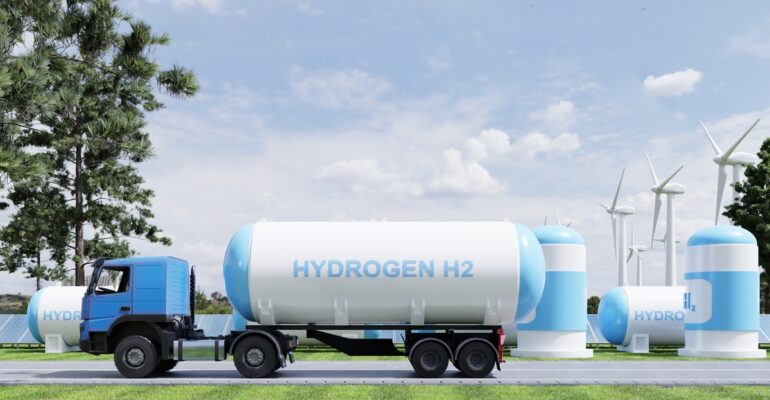
In the heavy-duty road transport sector, hydrogen fuel cell electric vehicles (FCEVs) offer advantages in energy density and refueling time. Hydrogen-powered trucks can refuel in 10–20 minutes and travel more than 600 km, characteristics that are difficult to achieve with conventional batteries for heavy-load applications. The IEA 2023 report notes that more than 60,000 hydrogen-powered vehicles are already operating globally, with significant growth in buses and heavy trucks in China and South Korea.
For urban mass transportation, hydrogen buses are among the most commercially mature applications. The Joint Initiative for Hydrogen Vehicles across Europe (JIVE), supported by the European Union, has deployed hundreds of hydrogen fuel cell buses in various cities. The European Environment Agency (EEA) (2022) concluded that integrating hydrogen buses into public transport networks can significantly reduce local emissions (NOx and particulate matter) while also lowering noise pollution in urban areas. In addition, the depot-based refueling model—where fueling is centralized in one location—makes infrastructure deployment more concentrated and economical compared with individual passenger vehicles.
In the maritime sector, hydrogen and its derivatives such as green ammonia are leading candidates for decarbonizing long-distance shipping. The International Maritime Organization (IMO) (2023) has set a target to reduce greenhouse gas emissions from international shipping to net zero around mid-century. Since large cargo ships consume enormous amounts of fuel and operate across continents, hydrogen-based synthetic fuels are considered more realistic than full battery electrification.
The aviation sector faces major decarbonization challenges because of its very high energy-per-weight requirements and the limited availability of ready-to-scale alternatives. The International Air Transport Association (IATA) in its Net Zero Roadmap 2023 estimates that around 65 percent of emission reductions by 2050 will come from sustainable aviation fuel, while hydrogen and new technologies could contribute around 13 percent. The use of liquid hydrogen in commercial aircraft is still at the demonstration stage and is projected to begin entering the market after 2035, meaning its short-term contribution remains limited.
Market structure indicates that heavy transportation and mass transportation are rational segments for the early adoption of green hydrogen. Their high energy consumption, centralized operating patterns, and strong regulatory pressure on emissions make infrastructure investment more economical than in light vehicles. The consensus across multiple reports suggests that green hydrogen has the potential to become a key pillar of heavy transport decarbonization over the next two to three decades, provided that investment acceleration and policy consistency are maintained.