
(Tuesday, 27/02/2024) That evening, the roar of water intertwined on the Cimaja River, Cikakak District, Sukabumi Regency, West Java Province. The water flowed quite fast. The high rainfall was the reason for the high water discharge in the Cimaja River. A tangle of iron ropes strung together for approximately 2 meters and filled with plastic waste and plant waste that functioned as an emergency dam or “Garbage Embankment” for the Ciptagelar village community, a situation that was quite concerning indeed, but this initiative was what the residents could realize, considering that the main dam of the Ciptarasa Village Micro Hydro Power Plant (PLTMH) had broken since November, 2020.
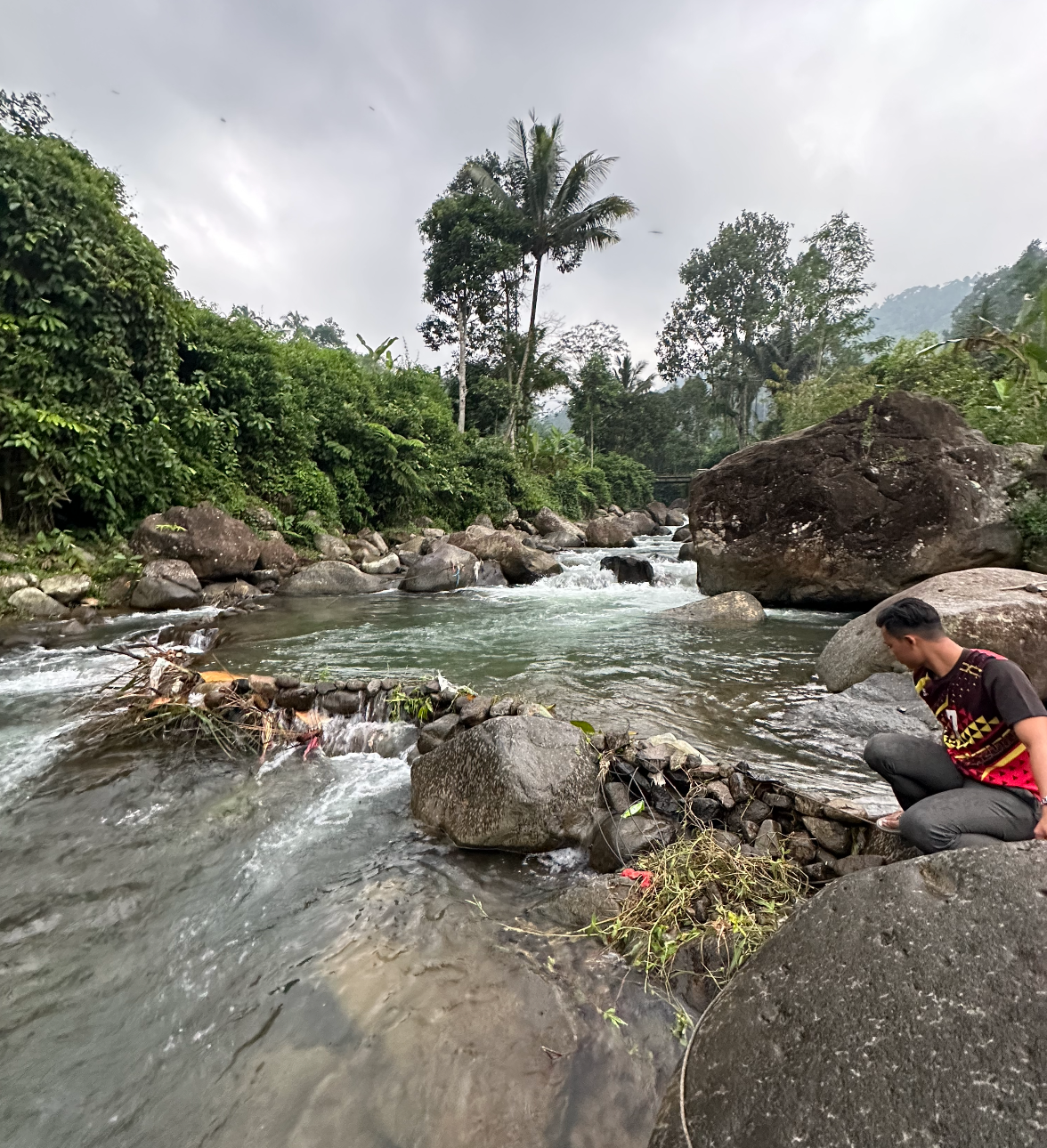
Kang Chakra, Secretary of Ciptarasa Village, is inspecting the condition of the “Garbage Dike,” which has been the main water channel to the Ciptarasa Micro Hydroelectric Power Plant (PLTMH) since the Main Dam broke.
The Ciptarasa Village Micro Hydroelectric Power Plant, when optimal, can generate at least 85 kWh of electricity, enough to power approximately 200 homes in Ciptarasa Traditional Village. Most homes only use one lamp and one cellphone, so their electricity usage is minimal. This allows for significant savings.
BENDUNGAN JEBOL
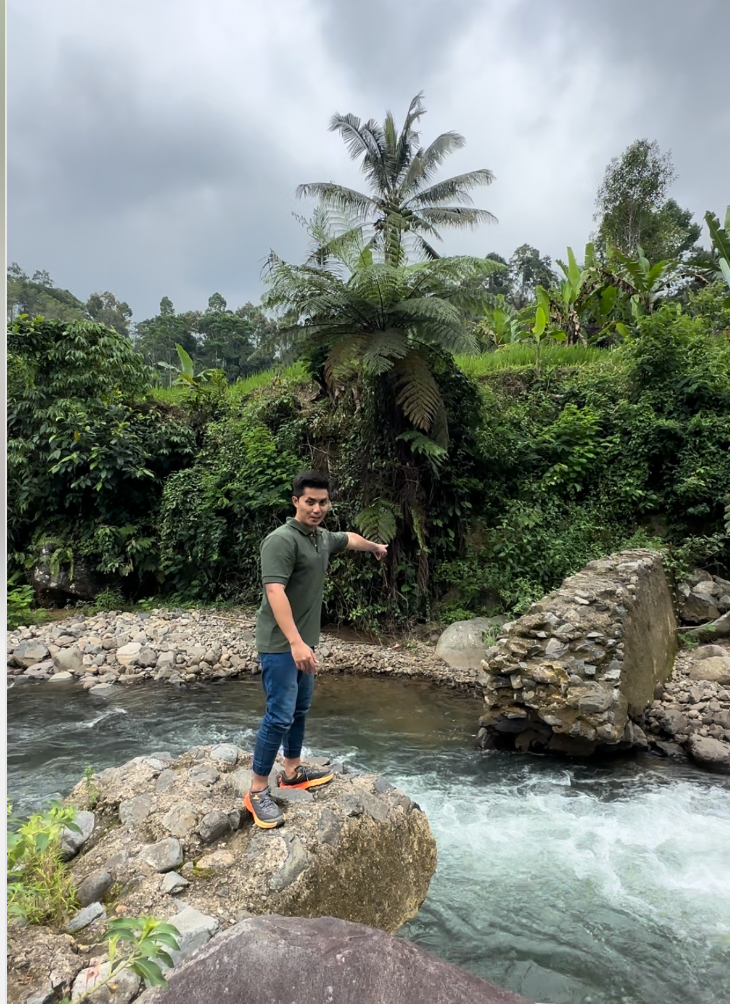
Riyan Nurrahman, a Clean Energy Generation Campaigner, stands beside the main dam of the Ciptarasa Village Micro Hydroelectric Power Plant (MHP), which was breached by floodwaters. This situation has reduced water flow to the Ciptarasa MHP, often causing it to fail.
The breach in the main dam of the Ciptarasa MHP was severe, preventing approximately 80% of the water from entering the dam. Consequently, the turbines in the MHP also cannot rotate optimally. As a result, the MHP often lacks water resources, and the electricity it generates becomes unreliable or experiences frequent power outages.
CHEAP ELECTRICITY
However, approximately 200 families in the Ciptarasa Traditional Village who enjoy clean energy from the MHP only pay between 20,000 and 100,000 rupiah, depending on the number of electrical appliances installed in their homes. This is a significant cost compared to relying on PLN electricity, which is more expensive per kWh.
RESIDENTS’ EMPLOYMENT
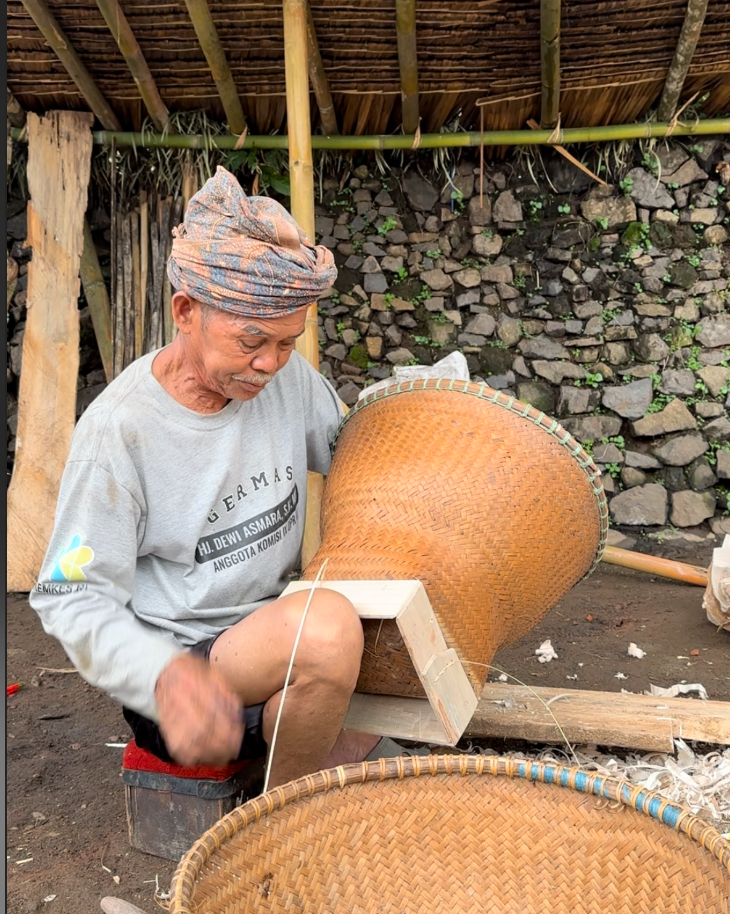
A Ciptarasa villager repairs a damaged rice container. They typically sell the woven rice containers for 40,000-60,000 rupiah per item.
Besides weaving, most Ciptarasa villagers work as palm sugar processors. The sap from the palm tree is collected for a day and cooked until dry, resulting in palm sugar. It is sold for 15,000 rupiah per kilogram. The villagers’ livelihoods are solely focused on daily living, including food supplies. Many villagers cannot continue their education beyond junior high school. This situation complicates their economic resilience. Consequently, self-funding to repair the dam is not possible due to the residents’ economic situation.
