
GEN-B South Jakarta Instills the Spirit of Carbon Emission Reduction in Southeast Asia’s Most Polluted City by 2023
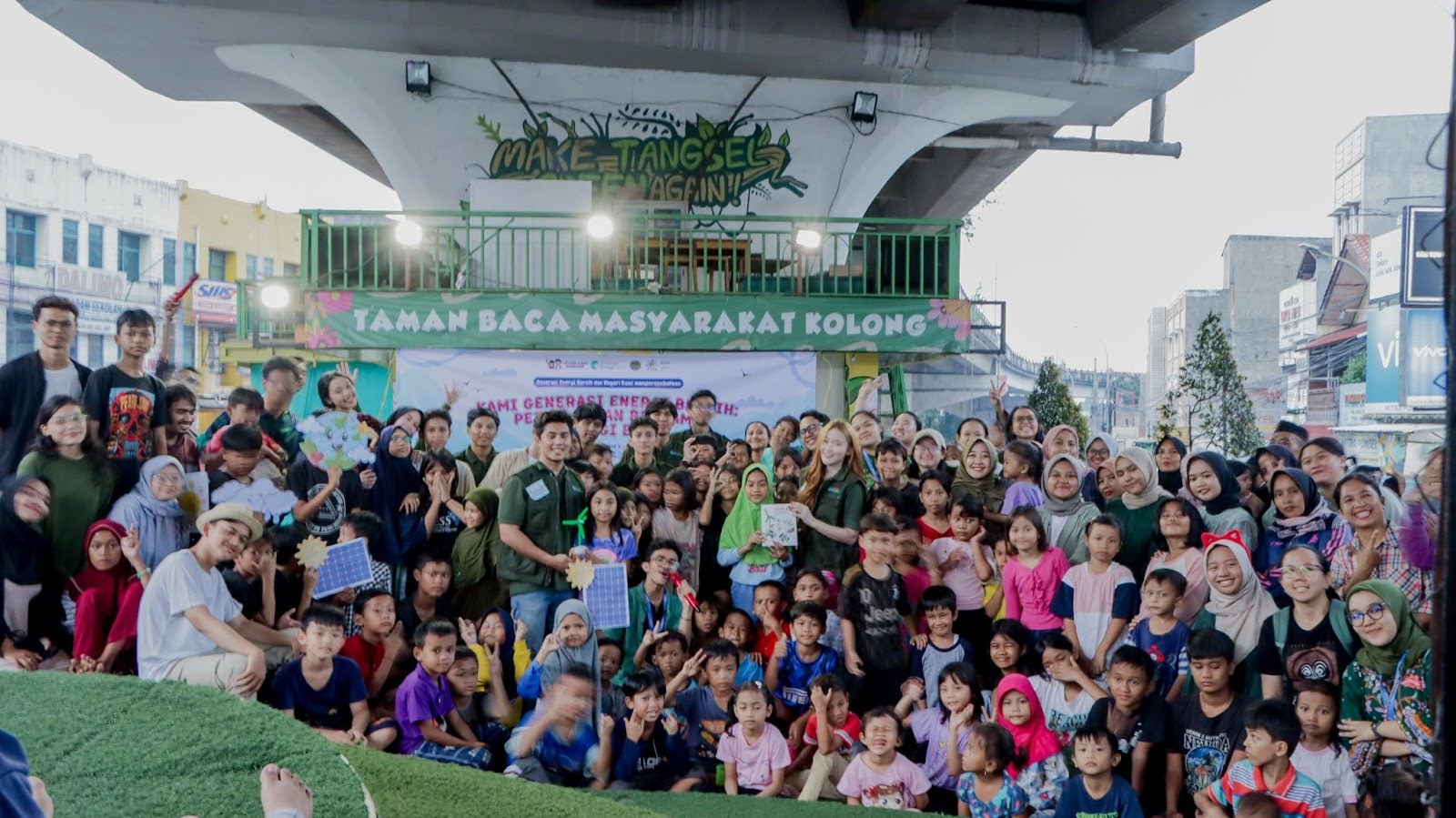
Telling Renewable Energy Stories while Donating Snake Plants with children from the Kolong Community Reading Garden (TBM Kolong), Sunday, March 24, 2024. The South Jakarta Clean Energy Generation, along with Negeri Kami (Our Country) and the Kolong Community Reading Garden (TBM Kolong), told stories with the theme “We Are the Clean Generation: A Joint Adventure to Reduce Emissions.” The event was attended by 130 people, 80 children and 50 adults.
This activity aims to provide insight to the local community, especially children, as the future generation who will be directly involved in the energy transition phase in Indonesia, including South Tangerang.
This is inseparable from the results of the report from Swiss technology company IQAir, released on March 19, 2024, regarding global air quality monitoring in 2023. For this year’s report, data from more than 30,000 air quality monitoring stations in 7,812 locations across 134 countries and territories was analyzed by IQAir air quality scientists. The report identified Indonesia as the most polluted country in Southeast Asia, with South Tangerang as the most polluted city, reaching an annual PM2.5 level 14 times higher than the WHO guideline, reaching 71.7 micrograms per cubic meter (µg/m³). This makes South Tangerang’s air quality worse than Jakarta’s 43.8 µg/m³.
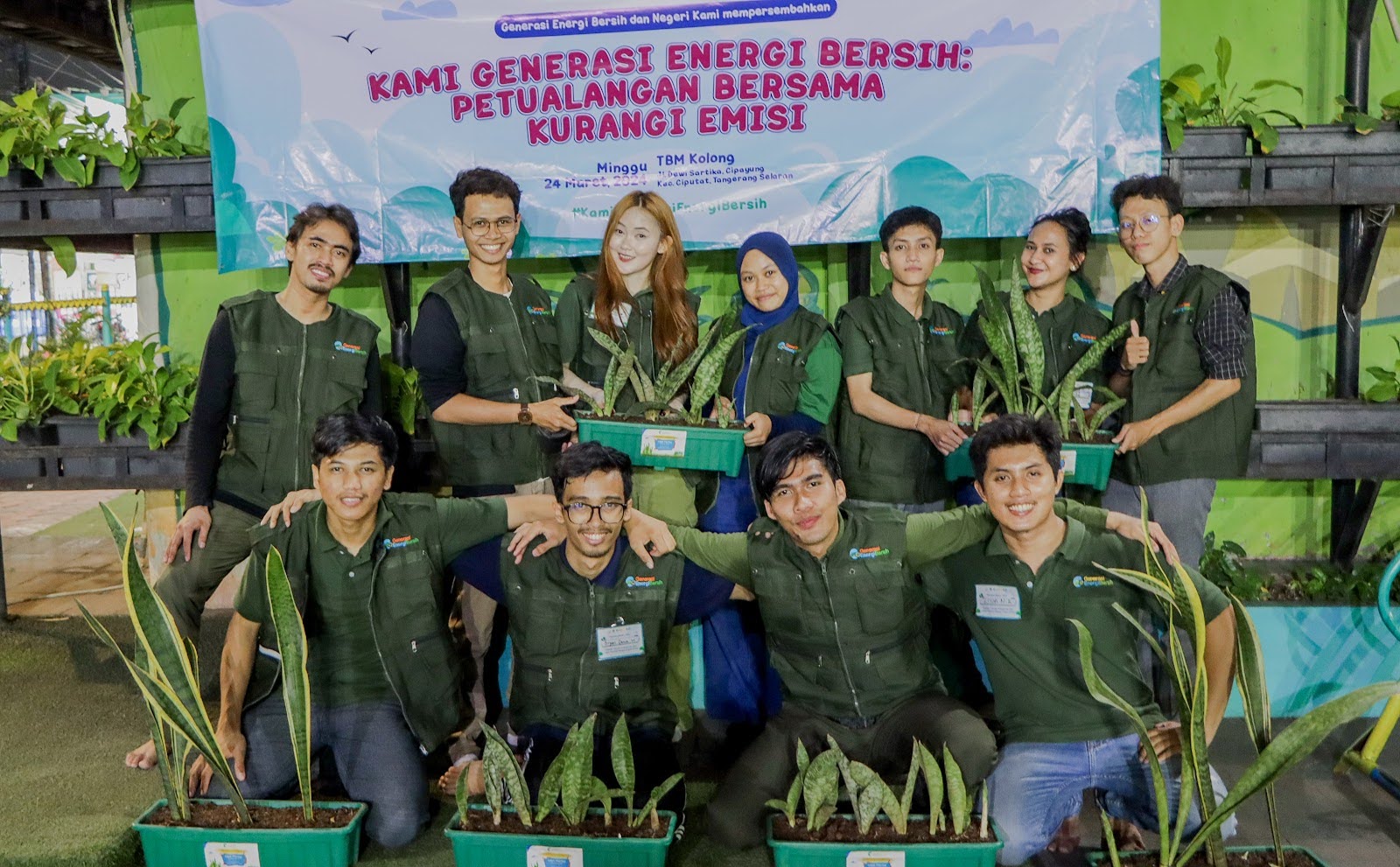
The South Jakarta Clean Energy Generation Management donated Snake Plants to the Kolong Community Reading Park (TBM) in South Tangerang as an effort to reduce 5.8 kg of CO2eq emissions per year.
Besides South Tangerang, which ranked first, the three other most polluted cities in Indonesia are Tangerang, which ranked third with 54.1 µg/m³; Bekasi City, which ranked seventh with 49.9 µg/m³; and Jakarta, which ranked ninth with 43.3 µg/m³. This means that four Indonesian cities are among the top 10 most polluted in Southeast Asia.
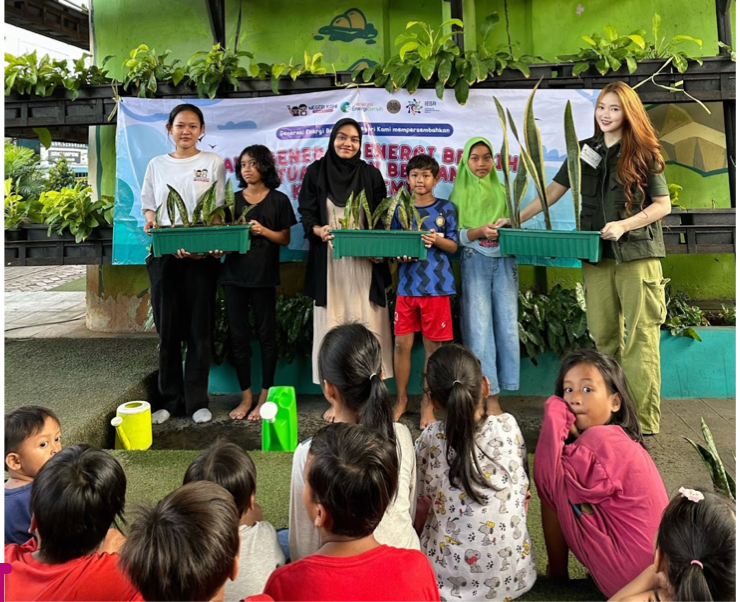
The Chairperson of the Indonesian Clean Energy Generation, May Lynn, symbolically handed over a Snake Plant to the Management of the Kolong Community Reading Park in South Tangerang.
Thus, educational activities such as storytelling are needed to foster a spirit of emission reduction among the general public. During this activity, the South Jakarta Clean Energy Generation donated 10 Snake Plants, each potted with a potential emission reduction of 5.8 kg CO2eq per year for 10 Snake Plants per pot. The activity also included storytelling and games about Clean Energy to educate children about the energy transition.
“Through this activity, we hope to foster an interest in reading and learning in children, as well as provide an understanding of the importance of reducing emissions to create a clean and healthy environment for future generations,” said Maya Lynn, Chairperson of the Indonesian Clean Energy Generation, during the activity “We Are the Clean Generation: A Joint Adventure to Reduce Emissions.”
In conclusion, with the data published by experts, we as the nation’s next generation need to take action to provide education and initiate action to reduce emissions in our country. One simple step we can take to reduce emissions is to educate children and teenagers through activities or toys related to renewable energy sources.
