
Participants, along with speakers and moderators, pose for a photo at the “SustainergyX! Express Yourself with Renewable Energy” seminar hosted by Amérta Waste Solution CEO, Alryan.
Saturday (July 20, 2024), 200 people attended the SustainergyX event held by Generasi Energi Bersih Indonesia (Indonesia’s Clean Energy Generation) at the Creative Space, Mbloc Space, South Jakarta. Meeting Indonesia’s Net Zero Commitment by 2060 will not be possible without a concerted effort from all elements of society to increase the renewable energy mix. The government plays a crucial role not only in this regard, but also in the general public, private sector workers, entrepreneurs, students, teachers, lecturers, and young people as a whole. Providing discussion spaces, access to accurate and credible sources of information, and access to new knowledge and developments in renewable energy are crucial for young people. To encourage the realization of the fulfillment of access to information and the latest developments related to renewable energy, the Indonesian Clean Energy Generation created the SustainergyX (Sustainable Energy for Excellence) activity. This activity is a series of activities over 2 days that includes seminars, workshops on solar power plants (PLTS) and wind power plants (PLTB), and an energy transition booth. The focus of energy transition issues such as the electricity sector, green buildings, sustainable transportation to the circular economy, and green industry are the main topics discussed in this activity.
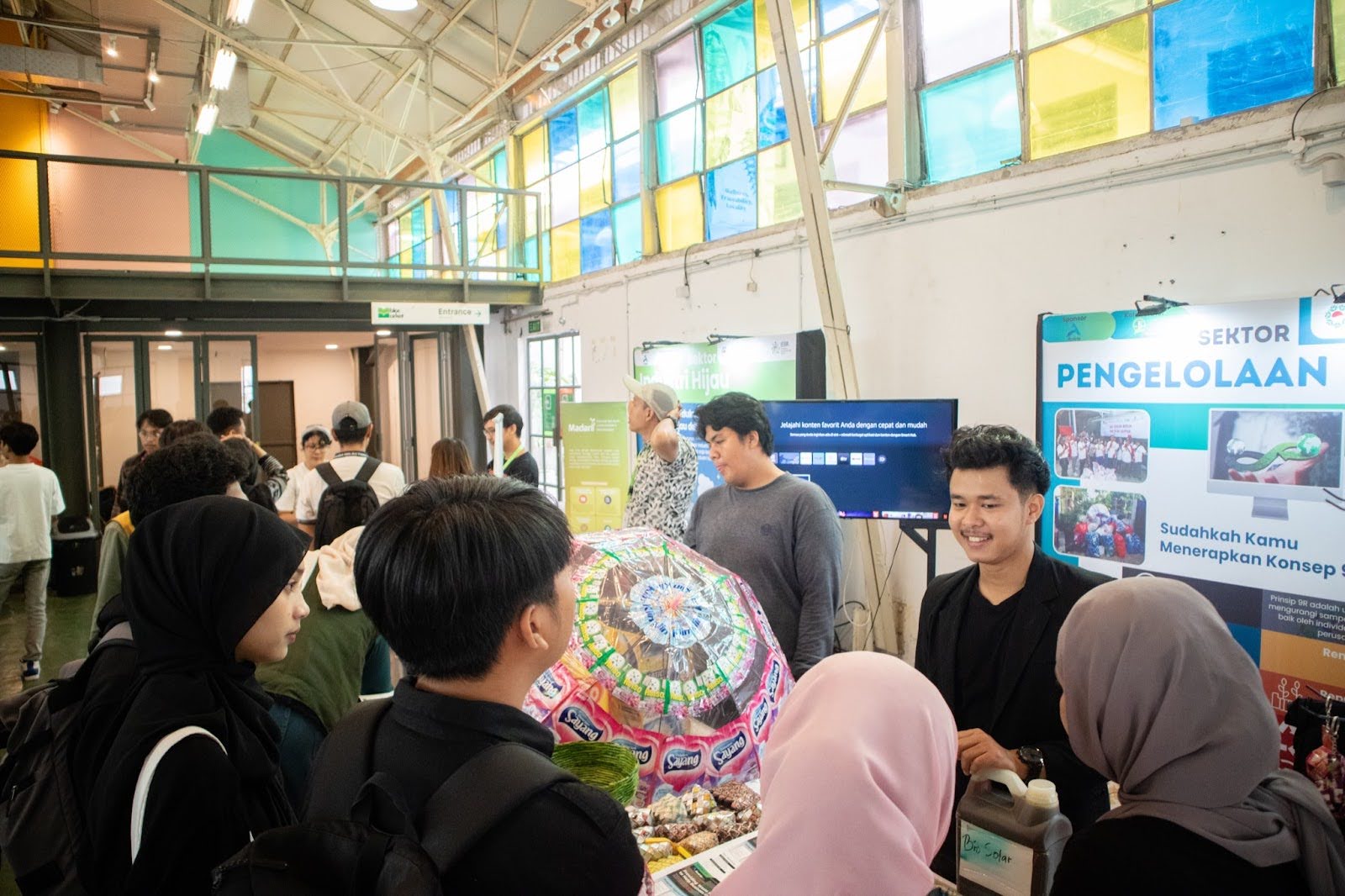
Alryan, CEO of Amérta Waste Solution, delivered a presentation on Non-Organic Waste Processing and the Potential of a Circular Economy at the Waste Management and Circular Economy Sector booth at SustainergyX.
According to Climate Watch data, in 2020, Indonesia emitted 1.48 billion tons/gigatons of carbon dioxide equivalent (Gt CO2e) of greenhouse gas emissions. This figure is equivalent to 3.1% of global greenhouse gas emissions, which totaled 47.5 Gt CO2e. Although a small percentage, Indonesia’s greenhouse gas emissions in 2020 were the sixth-largest in the world, after China, the United States, India, the European Union, and Russia. Breaking down the sources, the largest national greenhouse gas emissions in 2020 came from the energy sector (44%), land use/forestry (34%), followed by agriculture (10%), waste (9.4%), and industrial processes (2.3%). Meanwhile, at the global level, greenhouse gas emissions from the energy sector are far more dominant (75%), several times higher than the agricultural sector (12%), industrial processes (6.6%), waste (3.5%), and land/forest use (2.9%) (Katadata, 2023). Waste is one of the largest contributors to emissions in Indonesia because its management is not prioritized by the government. In fact, the Ministry of Environment and Forestry has issued a Book on Waste Contribution to Global Warming which contains an overview of waste to energy and green consumers as an effort to manage methane gas produced by organic waste and accumulation produced by non-organic waste. Amérta Waste Solution also prioritizes both of these in its production line. Eco Plakat, Eco Furniture, PET Flakes are the flagship products produced by Amérta Waste Solution. Amérta’s commitment to making the earth greener and more sustainable is clearly illustrated in the booth installed at SustainergyX. The educational booth on waste sorting and recycling products from waste to used cooking oil processing is proof of Amérta Waste Solution’s commitment.
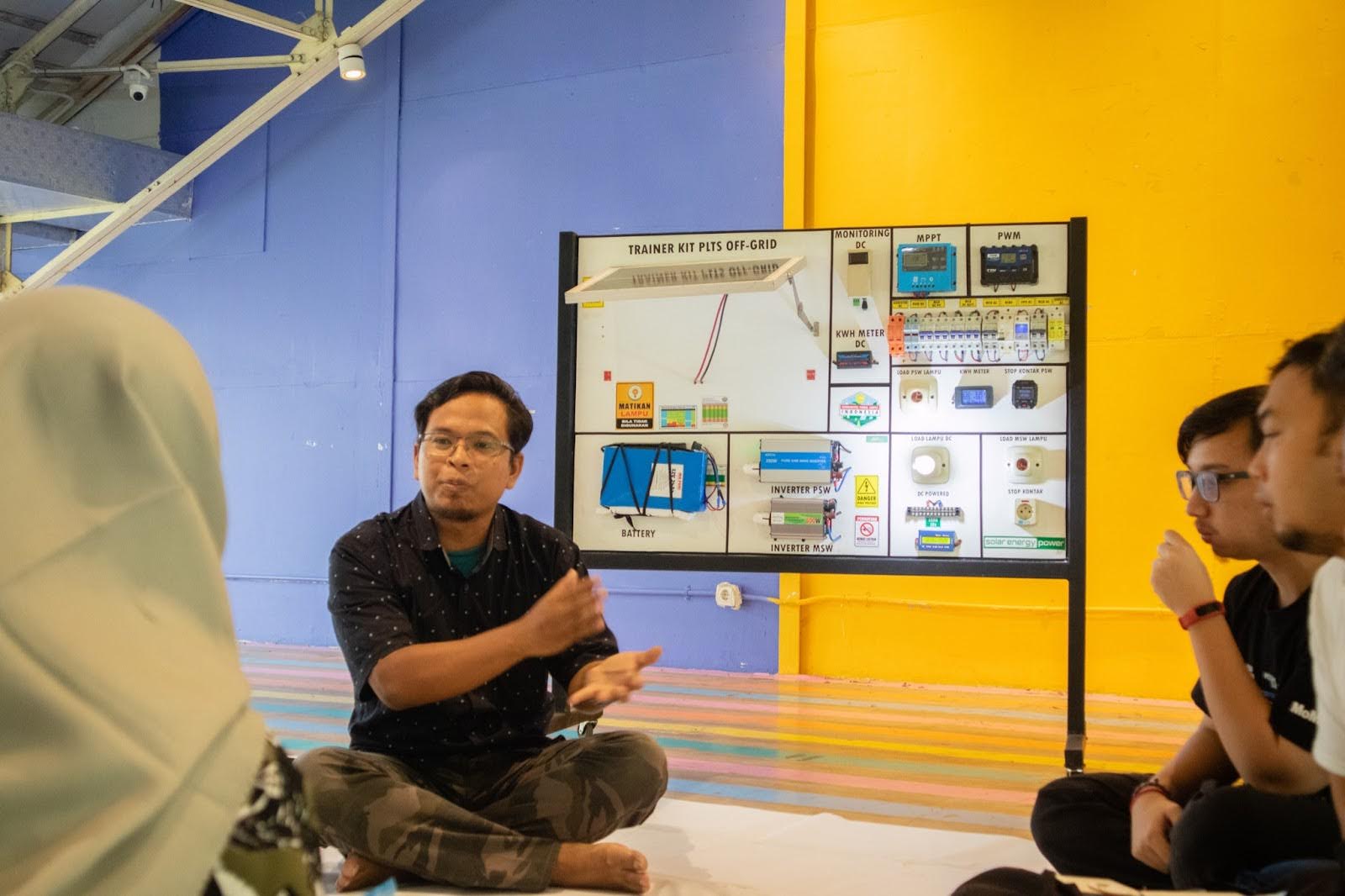
Temon Sujana, CEO of Solar Energy Power, explained the components of a solar power plant (PLTS), enabling it to convert solar energy to power a 5-watt lamp from his training kit.
After learning this, actions we can take include reducing our personal daily emissions from excessive electricity use as much as possible, including switching to public transportation or electric vehicles. However, as young people, we can also learn more about how renewable energy is used in our daily lives. One way is by attending the Sustainergy X 2024 Workshop. This two-day workshop covered the operation of a solar power plant (PLTS), illustrated by powering a mini helicopter propeller. On the second day, the workshop discussed the use of wind turbines (PLTB) to power LED lights. Both workshops aim to encourage young people to implement renewable energy in their daily lives. The benefits of utilizing solar and wind energy can be quite significant if we understand how they work and their supporting components. Electricity issues were also discussed in more depth at a seminar presented by Dr. Sustainergy, Lecturer in Electrical Engineering at Singaparbangsa University, Karawang. Yuliarman Saragih discussed how students can become proficient in installing rooftop solar power plants, which are implemented in various implementation projects such as internships and community service programs (KKN). This curriculum, which focuses on the application of renewable energy, should be developed by all educational institutions, from elementary to higher education, as exemplified by the curriculum of Singaperbangsa University, Karawang. The second seminar, which ran concurrently with the first, focused on green industry, was delivered by Riza Egi Arizona, Program Assistant for Sustainable Bioenergy Madani. Riza explained how bioenergy can be an option to address Indonesia’s emissions and dependence on fossil fuels, which are very expensive and often misused by individuals, hoarding or buying up inappropriately in underdeveloped areas like Kapuas Hulu.
The third seminar was delivered by Alryan, CEO of PT Amérta Waste Solutions. He explained how his company effectively manages waste and recycles plastic waste into more valuable items for many people. Benches, tables, ashtrays, and even fashion accessories can be made from recycled single-use packaging. The fourth seminar was delivered by Adrianus Satrio, Secretary of the Jakarta City Transportation Council (DTKJ). Adrian explained how the Jakarta Provincial Government, through regional-owned transportation companies (BUMD) such as Transjakarta, MRT, LRT, and Mikrotrans, is working to reduce carbon emissions through the use of electric vehicles and bicycle lanes, as well as intermodal integration. This is expected to generate public enthusiasm for switching to low-emission public transportation. The fifth seminar was delivered by Delilah Ivo, Marketing Executive of Priztins Indonesia, a company focused on green building innovation. She explained and demonstrated green building components such as Sunshield Film and Anti-Thermal Glass. Sunshield Film is a window film for homes and buildings that can block up to 90% of infrared rays and reduce cooling system energy consumption by up to 14.5%. Meanwhile, Anti-Thermal Glass is a thin, heat-resistant glass for homes and buildings with a visibility level of up to 67% and can block up to 94% of infrared rays.
The next collaborative activity is the Energy Transition Exhibition Booth, which is filled by Amérta Waste Solution for the Circular Economy sector, PT Solar Energy Power from the electricity sector, Priztins Indonesia from the Green Building Sector, & Madani Berkelanjutan in the Green Industry sector.

One Comment
thanks a lot of information keren