
The Generation Z Solar Group presented the results of the Renewable Energy Discussion on the use of solar power plants in Indonesia. (Clean Energy Generation Document, 2024)
Saturday (August 3, 2024), Ministry of Youth and Sports (Kemenpora) Building.
Together, we must reduce global temperature rise to 1.5%C to prevent natural disasters, biodiversity loss, and environmental damage. This also aligns with the agreement signed by President Joko Widodo, represented by the Minister of Environment and Forestry, Dr. Siti Nurbaya delivered a speech on Climate Change at the High-Level Signature Ceremony for the Paris Agreement held at UN Headquarters in New York, USA, on Friday, April 22, 2016. The event was opened by UN Secretary-General Ban Ki-moon, who organized the ceremony in accordance with the mandate of the 21st Conference of the Parties to the UN Framework Convention on Climate Change (UNFCCC COP-21) in December 2015 (PPID KLHK, 2016).
The vision of Indonesia Emas 2045, an Independent, United, Sovereign, Just, and Prosperous Republic of Indonesia, conveyed at the 100th Anniversary of the Youth Pledge, requires Indonesia to make the energy transition to renewable energy more democratic. Generation Z (born between 1997 and 2012) currently constitutes the largest generational group in Indonesia, representing 27.94% of the total population, or 74.93 million people. Their numbers may even be larger than the millennial generation, which is the second largest generation in Indonesia with 25.87% of the total population or 69.38 million people (Indonesia Gen Z Report 2024). As the generation with the largest population in Indonesia, Gen-Z has entered into a productive generation during the student period and new graduates have become an inseparable part of their daily lives. However, to be able to support the 8% GDP target of the President-Elect, this generation needs to acquire renewable energy knowledge and skills so as not to produce excessive carbon emissions and reduce the number of Net Zero Emission Indonesia 2060 or sooner. Clean Energy Generation Campaigner, Riyan Nurrahman had the opportunity to be a tutor in the renewable energy pillar workshop of the Indonesia Youth for a Sustainable Future (IYSF) activity at the Ministry of Youth & Sports.
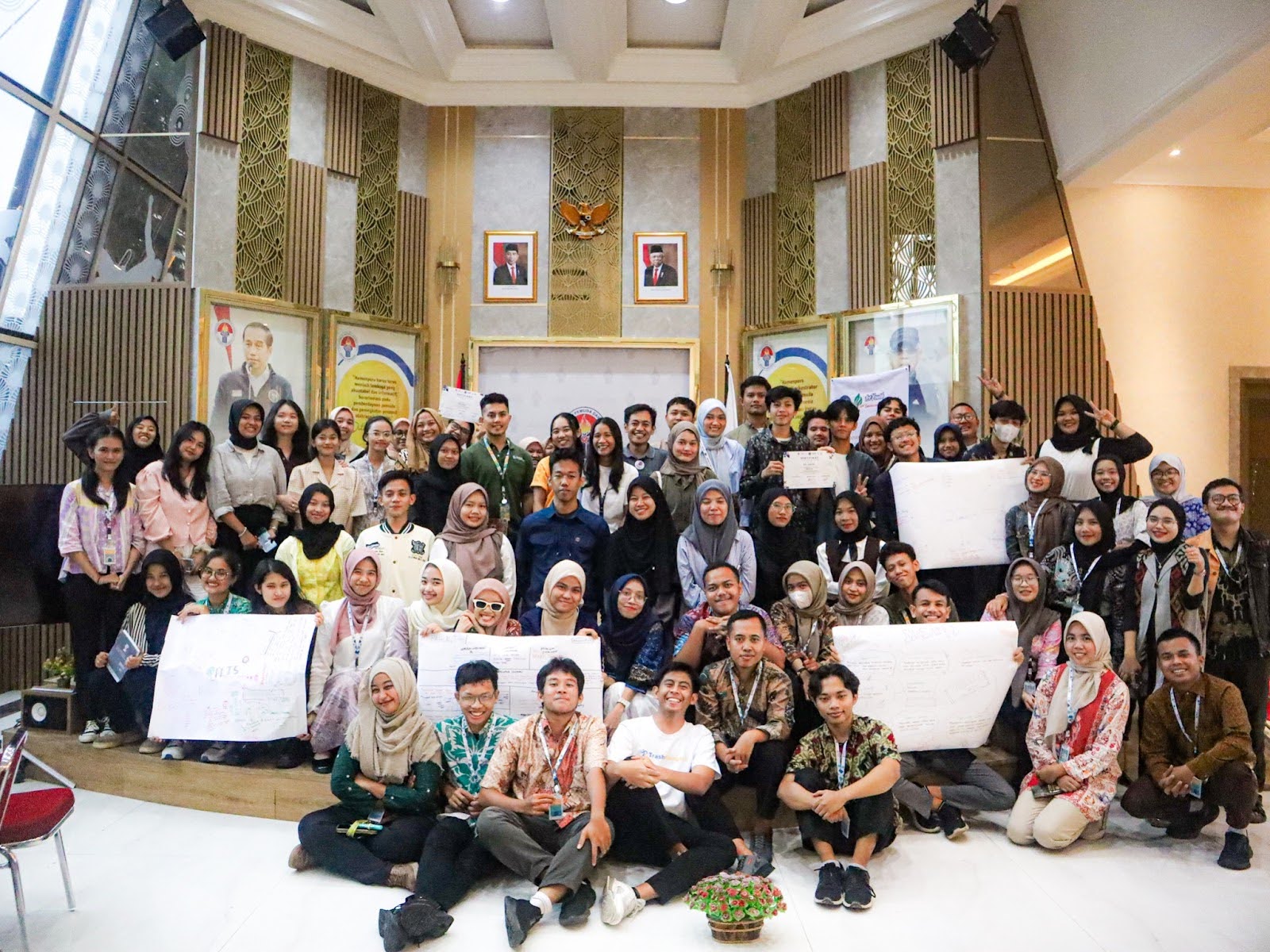
The 2024 IYSF Workshop Committee, Tutors, and Participants presented the results of a discussion initiated by Trashranger.id and the Ministry of Youth & Sports (Trashranger.id Documentation, 2024).
Indonesia’s Net Zero Emission commitment has led to greater attention being paid to renewable energy as a potential replacement for dirty energy, which has become the primary energy source for developing countries worldwide and is a major source of emissions, contributing to the greenhouse gas effect and various natural disasters that threaten environmental sustainability.
The most inclusive and easily implemented renewable energy in Indonesia is solar energy. Its potential is 4.8 kWh/m2, equivalent to 112,000 GWp, but only around 10 MWp has been utilized. The government has issued a Roadmap for Solar Energy Utilization, targeting an installed solar power plant capacity of 0.87 GW by 2025, or approximately 50 MWp/year. This figure represents the significant market potential for future solar energy development. The absorption of solar energy into electrical energy occurs through a photovoltaic technology process, namely solar cells. Currently, there are many solar cell manufacturing technologies. Conventional solar cells that are already commercially available use crystalline silicon wafer technology, the production process of which is quite complex and expensive. In general, conventional solar cell manufacturing begins with a silica purification process to produce solar-grade silica (ingots), followed by cutting the silica into silica wafers. The silica wafers are then processed into solar cells, which are then assembled into solar modules. The final stage is integrating the solar modules with the Balance of System (BOS) into a solar power plant system. The BOS is a supporting component used in solar power systems such as inverters, batteries, control systems, and others.(litbang.esdm.id, 2012).
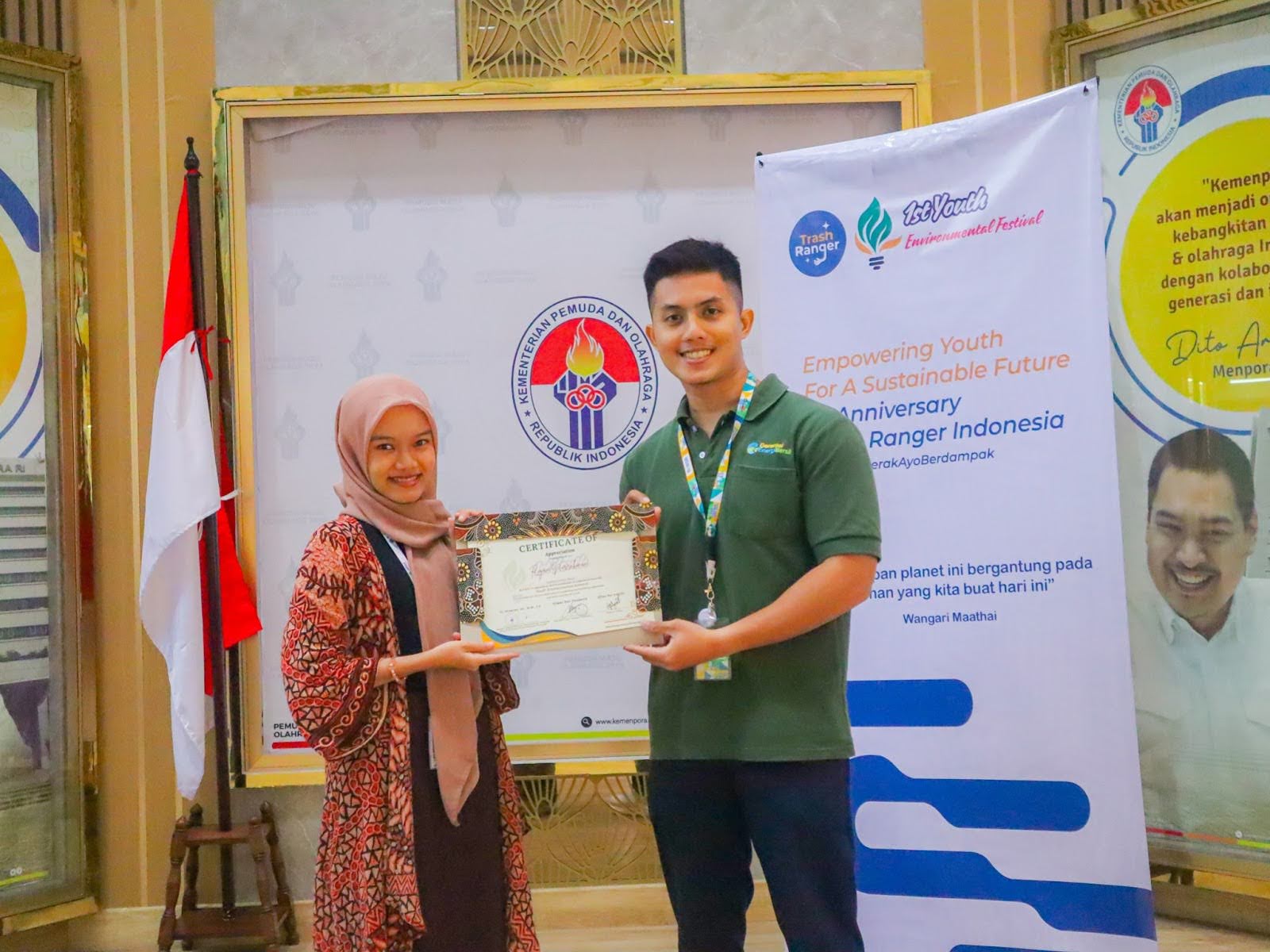
Renewable Energy Workshop Tutor Certificate Presentation to Riyan Nurrahman, a Clean Energy Generation Campaigner who led the discussion on solar power plants (PLTS) in the Surya Group.
(Trashranger.id Documentation, 2024)
The discussion proceeded naturally, with participants taking the initiative to discuss the most easily implemented energy sources in Indonesia. The initial choice was waste-to-energy processing, but this processing still produces carbon emissions. Although it has considerable potential as an energy source due to its vast quantity, its chaotic management poses the biggest challenge. The Surya Group then turned to solar energy due to its widespread distribution across Indonesia. It is freely accessible to everyone and can be developed into a renewable energy source. The development of its solar power plants is also progressing rapidly. One of the Clean Energy Generation volunteers has even become a seller of solar power plant components, from batteries to solar panel modules. He gained inspiration and installation instructions from his campus at Singaperbangsa University in Karawang. Another participant also had internship experience at the IESR Semarang branch office, Grace, who was also interning at one of PLN’s power generation facilities, explained that at her internship place she learned that the environmentally friendly process was managed quite well and had also been published on social media such as Instagram and YouTube.

One Comment
I do not even know how I ended up here but I thought this post was great I dont know who you are but definitely youre going to a famous blogger if you arent already Cheers