
The Clean Energy Generation delegation attended the National Convention on the Indonesian National Work Competency Standards (SKKNI) for Green Productivity, held by the Ministry of Manpower of the Republic of Indonesia.
(Gen-B Documentation, August 26, 2024)
Jakarta (August 26, 2024), Industrial waste pollution remains rampant in Indonesia. Rivers, which should be a pleasant place to unwind for residents living near them and a habitat for fish and other aquatic animals, have instead become sources of disease due to environmental pollution. This is evident in the case of the Citarum River pollution, which was attempted to be resolved through Presidential Regulation Number 15 of 2018 concerning the Acceleration of Pollution Control and Damage to the Citarum River Basin. According to data from the Ministry of Environment and Forestry, 662 of the approximately 3,000 factories in the upstream Citarum River Basin do not yet have wastewater treatment plants (WWTPs). They discharge their waste directly into the Citarum River. 272 factories are still improving their WWTPs, and 65 have just built them. This situation is likely to trigger the discharge of 340,000 tons of hazardous waste into the Citarum River every day. Only 382 factories have wastewater treatment plants (WWTPs), but not all of them meet established standards. Issues like these have raised questions about the success of the Golden Indonesia 2045 vision, which includes sustainable economic development. To prevent the failure of the Golden Indonesia 2045 Vision, the Indonesian Ministry of Manpower has drafted a Green Productivity guide. According to the Indonesian Ministry of Manpower, Green Productivity is an environmentally friendly productivity concept that focuses not only on increasing national productivity but also on preserving the environment at every stage of the process. The government encourages all business sectors to take steps to reduce waste in energy use, promote the use of renewable energy, and encourage the creation of more green jobs in Indonesia (Binalavotas, Ministry of Manpower, 2024).
The term “Green Productivity” was first introduced by the Asian Productivity Association (APO) in 1994. The APO is an international intergovernmental organization established in 1961 with the aim of boosting productivity in the Asia-Pacific region through multilateral cooperation. To achieve these goals, APO created a framework and became a government partner to review government policies, become a think tank on productivity, and take part in smart initiatives in industry, agriculture, and other public sectors. APO is also an organization that formulated Green Productivity standards regulated in the Handbook of Green Productivity in 2006. The guideline became the basis for 21 APO member countries to implement their production schemes while still considering environmental sustainability. Indonesia was once the Chair of APO in 1968. However, it was only in 2024 that Indonesia took steps to be able to draft the SKKNI Green Productivity.
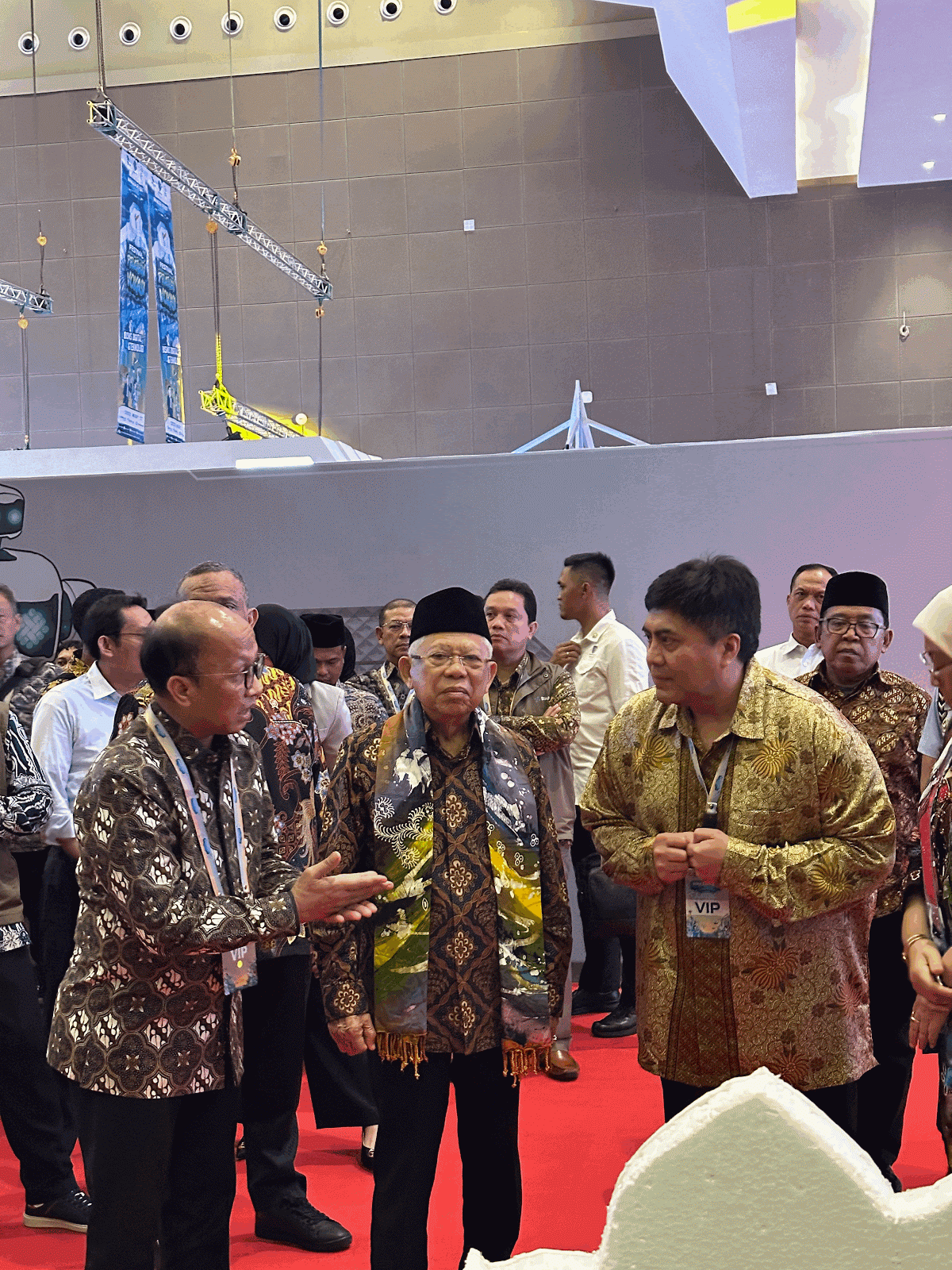
The Vice President of the Republic of Indonesia, K.H. Ma’ruf Amin, visited the Renewable Energy and Green Productivity Booth and was welcomed by the Director of Productivity Improvement at the Indonesian Ministry of Manpower, Decky Haedar Ulum, S.E., M.Kes.
Japan is one of the countries that has successfully implemented Green Productivity. The Japanese government has been able to increase its industrial productivity without excessively damaging or polluting its natural ecosystem. Lessons learned from Japan’s achievements include conducting Industrial Life Cycle Inventories, analyzing existing Industrial Life Cycles, and improving the quality of the life cycle. This is embodied in the Green Productivity tools currently being developed into the Indonesian Ministry of Manpower’s National Competency Standards (SKKNI) draft. This includes environmental analysis, environmental impact analysis, compliance and risk impact evaluation, and reporting and recommendations for productivity management that prioritizes environmental sustainability. This issue was discussed at the Indonesian Ministry of Manpower’s National Convention on Green Productivity Indonesian National Work Competency Standards (SKKNI), which invited environmental practitioners, researchers, and industry players to formulate better policy designs. In addition to holding the Convention, the Indonesian Ministry of Manpower also socialized Green Productivity to the general public and job seekers by holding the Naker Fest 2024 activity.
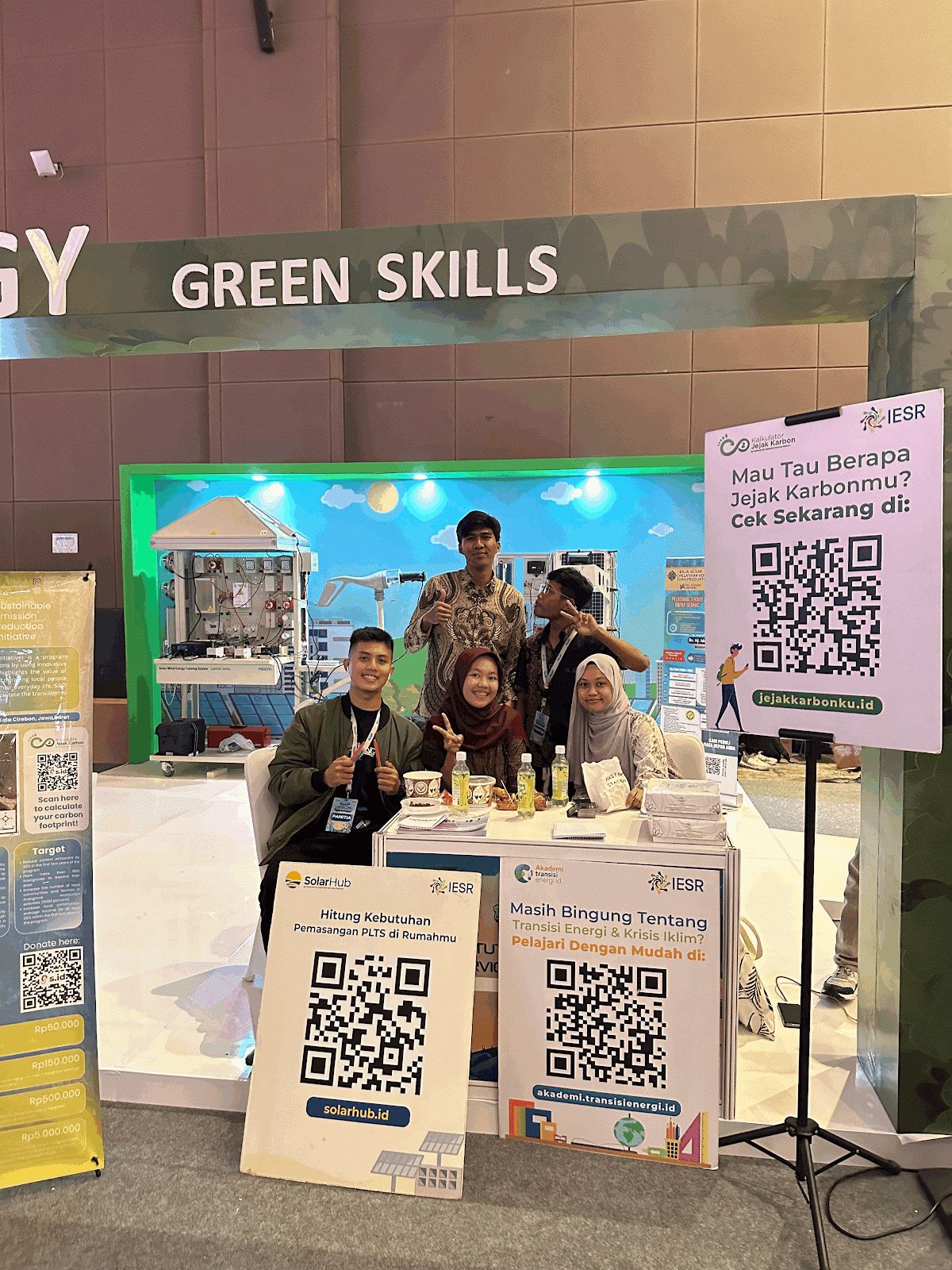
The Clean Energy Generation team is preparing to encourage Naker Fest attendees to adopt a low-emission lifestyle through the Jejakkarbonku.id Calculator.
Naker Fest 2024 is a vocational training festival organized by the Ministry of Manpower of the Republic of Indonesia. The event was successfully held from August 23rd to 25th, 2024, at JIEXPO Kemayoran, Jakarta. It was officially opened by the Vice President of the Republic of Indonesia, KH Ma’ruf Amin. Naker Fest also served as the Ministry’s opportunity to present the 2024 Naker Awards in several categories: the Employment Development Index Award, the Occupational Safety and Health Supervisor Award, the Zero Accident Award, the National Occupational Safety and Health Management System (SMK3) Award, the HIV/AIDS Prevention and Management Award in the Workplace, the Company Employing Persons with Disabilities Award, the Best Company Award, the Indonesian Migrant Worker Placement and Protection Service Award, and the Awarding of Music Competency Certificates. Naker Fest 2024 itself was attended by 110 companies and 50 MSMEs, offering 110,000 job openings. The event was also attended by the Indonesian Minister of Manpower, Ida Fauziyah, who delivered remarks after the Vice President of the Republic of Indonesia, K.H. Ma’ruf Amin.
To support the creation of Green Productivity and raise awareness of the importance of renewable energy among businesses and job seekers, Generasi Energi Bersih (Clean Energy Generation) accepted the invitation to attend this major event. The Jejakkarbonku.id calculator served as the primary tool for encouraging lifestyle changes among those visiting our Green Skills & Renewable Energy booth. The event was a lively success. We sincerely hope to inspire low-emission lifestyles for the more than 25,000 visitors to Naker Fest 2024.
